
Lifting process and characteristics of its work area
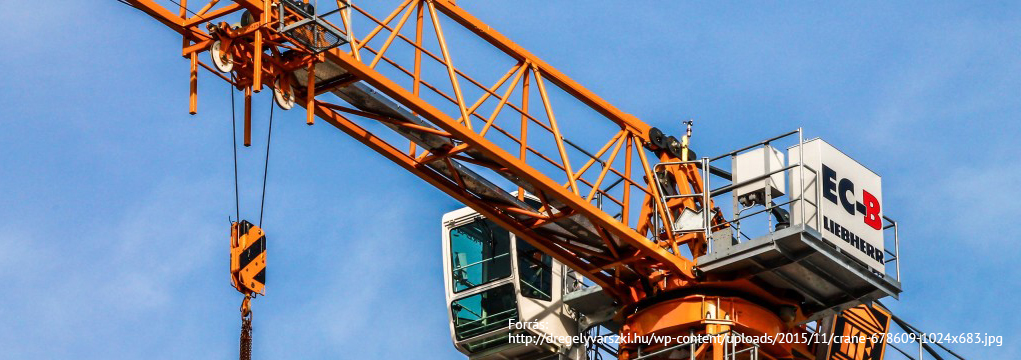
A lifting machine is a mechanically or manually (human-powered) operated structure or equipment that, in intermittent operation, can lift or lower a load either directly or with the aid of auxiliary devices, moving it from its starting position to its destination (Government Decree 47/1999. (VIII. 4.) GM on the Issuance of the Lifting Machine Safety Regulations). The lifting process is always determined by the structure to be lifted and the nature of the lift.
The Lifting Process
The lifting process may vary depending on the weight and shape of the element. An essential task is to classify elements into lifting categories. These are generally placed within the load capacity limits of the lifting machines.
Lifting category classification:
- category 501-1000 kg
- category 1001-1500 kg
- category 1501-2000 kg
- category above 2001 kg
Important!!! For heavy elements, the lifting process must also be planned, and a test lift must always be performed, during which the structure can be lifted a maximum of 50 cm from the vehicle. In addition, it is important to consider the dimensions of the elements. For example, in the case of a pillar, when lifting it from the bed of a truck, it is important to provide a separate transfer area for the element before lifting it in, as lifting it off would load the truck at one point, which would cause significant problems. In this case, a transfer area must be provided, but there are also elements that can be lifted from an axle.
https://www.youtube.com/watch?time_continue=1&v=FZw_zLNNZIk&embeds_referring_euri=https%3A%2F%2Farchphases.hu%2FCharacteristics of the Work Area
The technology required for assembling prefabricated structures and the selection of the appropriate machine depend on the size, terrain, and shape of the assembly area. These also determine the order of transport of the elements. The characteristics of the work area include the roads required for assembly, temporary site buildings, utilities, auxiliary structures, as well as auxiliary structures preceding the assembly.
Roads required for assembly, space requirement
The dimensions of the lifting machine and the dimensions and structure of the element to be lifted must always be taken into account. When calculating the space requirement, maneuverability and safety distances must be considered.
An example of this is crane installation.

In this case, it is clear that every part has maneuverability. In this particular instance, the truck and the mobile crane can remain together. It is important to note that for a mobile crane, space must also be allocated for outriggers, and a safety zone must be left around the crane being erected. The placement of the machines is determined by the direction of the lift (from where to where we lift), as well as the dimensions and technical data of the machines used.
Equipment, Personnel, Resources, Machines Used
The minimum crew required for lifting consists of five people. Two riggers, two people to receive the structure at the assembly site, one machine operator, and one lift supervisor.
The lift supervisor is the person who coordinates and directs the lifting process. This individual maintains communication between the riggers and receivers in coordination with the machine operator. This is ensured either by hand signals or by radio communication.
The riggers must be specifically trained for this purpose, as their task is also very significant from a safety engineering perspective.
The people receiving the structure place the prefabricated element into position, creating a secure connection between the structures. "Release" is only permitted when the temporary stability of the connection point is ensured.
Auxiliary devices used for lifting can include radios for communication, but the most important are the lifting aids (spreaders). These may vary depending on the lifting technique, the type of structure being lifted, and the lifting technology (manual, mechanical), as described above. The most important lifting machines used for lifting are: crane, lifting table, lifting leg, construction personnel/goods lift, construction goods lift, stacker, hoist, powered pallet truck, container lifting column, enclosed lifting platform, mobile work platform, parking lift, service lift, stage technology lifting equipment, level compensator, railway lift, electric hoist.

Summary:
The space requirement for lifting is determined by the structure to be lifted and the nature of the lift, but generally, maneuverability and adherence to safety distances are essential. What is certain, however, is that a minimum of five skilled personnel are required to carry out the lifting operation.
Sources:
BME Department of Building Construction, Organization of Structure Assembly Lecture Notes
YBL Lecture Notes